Plan Bangkok:
the 2026 rules
Bangkok rewrote its rulebook in 2025–26 and most guides haven't caught up. The short version: file the free TDAC digital arrival card online before you fly (mandatory since May 2025), visa-free entry is now 30 days for 54 nationalities — not the 60 days older guides still claim — and one contactless Visa or Mastercard now runs the entire train network, because the MRT's stored-value cards died in June 2026. Add an eSIM before you land, carry ฿1,000–2,000/day in cash for the street QR your foreign apps can't touch, and you've solved 90% of Bangkok logistics before takeoff.
TDAC, visas, and the two-airport trap
TDAC first. Thailand's digital arrival card has been mandatory since May 1, 2025: file it free, online, no more than 3 days before arrival, and show the QR code at immigration. The only trap is the ecosystem of paid lookalike sites charging for the free form — use the official Thai immigration site only, and treat any 'TDAC processing fee' as a scam by definition.
Visas: 30 days, not 60. In 2026 Thailand rolled its blanket 60-day visa-free entry back to 30 days for 54 nationalities (US, UK, EU, Australia, Japan among them). Most guides and old forum threads still say 60 — they're out of date. Need longer? One 30-day extension costs ฿1,900 (~$57) at an immigration office. Overstaying costs ฿500/day, and past 90 days it's a one-year ban.
Bangkok has two airports 45 km apart, and mixing them up is the most expensive mistake on this page. BKK (Suvarnabhumi) handles most international carriers; DMK (Don Mueang) is the AirAsia/Lion/Nok budget hub. Check the airport code on every ticket — especially self-transfer connections, where a cross-town dash through traffic can eat 90 minutes.
One regional note: the Thai–Cambodia land crossings remain closed and Bangkok is entirely unaffected — if Cambodia is on your route, fly there.
Suvarnabhumi to downtown, compared
Trains, boats, taxis — what changed
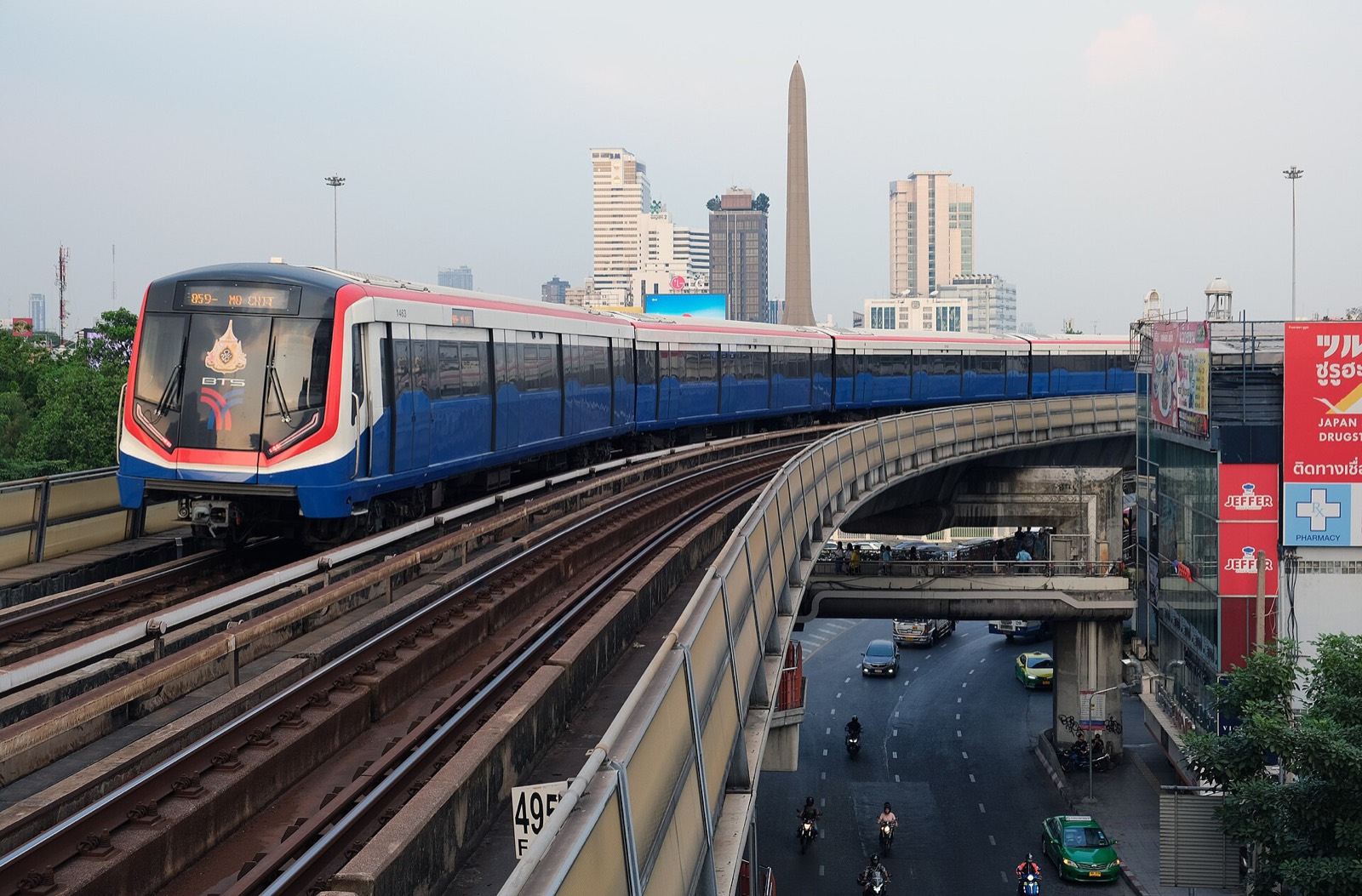
Trains: one bank card is the answer. MRT stored-value cards died on June 1, 2026 — EMV contactless tap (any Visa/Mastercard) now covers MRT, BTS and the Airport Rail Link. Tap in, tap out, done; no queue, no top-up card. Fares run BTS ฿17–62, MRT ฿17–43. And the candid bit other guides dodge: the famous ฿20 flat fare (September 2025) is for Thai nationals only — it requires the Tang Rat app and a Thai ID. Tourists pay full fare. It's dual pricing; grumble and tap anyway, the trains are still cheap.
Boats are transport and sightseeing at once. Chao Phraya Express orange flag: ฿20 flat — the best cheap 'cruise' in Bangkok. The blue-flag tourist boat runs ฿30–35 a ride or ฿150–200 for a day pass (worth it only if you're hopping piers all day). The Saen Saep khlong boat (฿15–25) is the fastest Sukhumvit-to-Old-Town shortcut and feels like a water rollercoaster; that's a feature.
Road: the meter starts at ฿40 now — many guides still say ฿35; they're wrong. If a driver refuses the meter, walk away and open an app: Bolt runs 10–25% cheaper than Grab on most routes, and both surge 2–3× in rain. Motorbike taxis (orange vests, ฿15–30) beat everything for short hops in gridlock. Tuk-tuks are a 10-minute experience, not transport — negotiate ฿100–200 up front or skip. For intercity trains — Ayutthaya, the sleepers north — book at the station or via the official D-Ticket site.
Baht, ATMs, and the eSIM default
The baht is on your side in 2026: ~฿33.6 per USD mid-year — the best tourist rates in over a year. Exchange order of preference: SuperRich > Thai banks > airport booths. Thai ATMs charge ฿220–250+ (~$7) per withdrawal regardless of amount — withdraw big, rarely, and always decline dynamic currency conversion ('convert to your home currency?' means 'pay extra').
Cards vs cash: cards are fine in malls, hotels, chains and every train gate — but the street runs on PromptPay QR, which does not accept foreign banking apps. Carry ฿1,000–2,000 (~$30–60) per day in cash and keep small notes; a ฿1,000 bill at a ฿50 noodle stall is a social event.
Connectivity: an eSIM before you land is the default play — from ~$9 for Thailand data, installed at your departure gate, working the moment you clear the jet bridge. That matters, because Grab, maps and your TDAC QR all start at the airport. Prefer physical? Airport counters sell tourist SIMs at ฿299–399 for 8 days; the market is AIS vs True, and both are excellent in Bangkok.
The rules that changed — and the ones that bite
Health: Bangkok's private hospitals (Bumrungrad, Bangkok Hospital) are genuinely world-class — and they bill upfront, so travel insurance isn't paperwork, it's the payment plan. Dengue is year-round: DEET at dawn and dusk. Tap water no; factory ice (the cylindrical kind with the hole) yes. Tourist police: 1155.
Scams, condensed to one sentence: ignore anyone who approaches you first near a major attraction. That single habit defuses the 'palace is closed' redirect, the gem-shop tuk-tuk circuit and the friendly-student shop steer. Taxi refuses the meter? Grab or Bolt has already defanged that one. Bangkok's scams are opt-in — you have to say yes to a stranger for almost all of them to work.
Rules that changed, 2025–26 — the freshness list: alcohol sale hours are now a unified 11:00–24:00 (the 53-year-old afternoon sales ban is gone; Buddhist holy days stay dry, with hotel and airport exemptions). Vapes are fully illegal — fines run to ฿30,000 and there are documented shakedowns of tourists carrying them; leave it at home, full stop. Cannabis is back to medical-prescription-only since June 2025 — the dispensary free-for-all is over. Lèse-majesté laws are enforced and severe: exercise extreme caution about the monarchy anywhere, including online, and stand when the royal anthem plays. Drones require registration before you fly one — the penalties are draconic. And the overstay math again: ฿500/day, one-year ban past 90 days.
Weather in one paragraph: November–February is the sweet spot — but PM2.5 smog season runs December–March, and January–February is the worst air in the best weather; pack an N95 and check the IQAir app. April is 40°C and Songkran (April 13–15) — avoid unless the water fight is the trip. May–October is rainy season: short violent downpours that drain in 30–60 minutes, with September–October the wettest and cheapest months.
Four things to sort before you fly
None of these are glamorous. All four are cheaper and easier from your sofa than from an airport queue.
before the flight
Bangkok hotels are the world's best five-star value — dorms ฿350–600, solid 4-star ฿2,500–4,500, true five-star from ฿5,000 — but December–January cool season and Songkran week sell out months ahead. One legal note listings won't volunteer: Airbnb stays under 30 days in unlicensed condos remain illegal — hosts get fined and guests get turned away by building security. Book hotels, or read our neighborhood verdicts first.
Search Bangkok hotelsFAQ
What are Thailand's visa rules in 2026?
Visa-free entry is 30 days for 54 nationalities (US, UK, most of the EU, Australia, Japan included) — rolled back from 60 days in 2026, so distrust any guide still quoting 60. One 30-day extension costs ฿1,900 at an immigration office. The old rule letting officers ask for ฿10,000–20,000 in cash on arrival technically exists and is occasionally enforced.
What is the TDAC and do I really need it?
The Thailand Digital Arrival Card — mandatory for all foreign arrivals since May 1, 2025. File it free online no more than 3 days before arrival and show the QR at immigration. Only use the official immigration site: paid third-party 'TDAC service' sites are charging you for a free form.
How much cash should I carry in Bangkok?
฿1,000–2,000 (~$30–60) per day covers street food, boats, markets and massages; cards handle malls, hotels and every train gate. Street QR codes run on Thai PromptPay, which foreign banking apps cannot use. Withdraw large amounts rarely — ATMs charge ฿220–250+ per pull — or exchange at SuperRich, and always decline dynamic currency conversion.
Is Bangkok tap water safe to drink?
Don't drink it — the pipes and tanks between plant and tap are the gamble. Bottled water is everywhere and cheap, hotels provide it free, and factory ice (cylindrical with a hole through it) is safe. Brushing your teeth with tap water is fine.
Do I need a transit card for the BTS and MRT?
No — this changed in 2026. MRT stored-value cards were discontinued on June 1, 2026, and EMV contactless tap now covers MRT, BTS and the Airport Rail Link: tap any contactless Visa or Mastercard at the gate. The ฿20 flat fare you may have read about is for Thai nationals only; tourists pay ฿17–62 (BTS) / ฿17–43 (MRT) per ride.
When is Bangkok's air pollution season?
PM2.5 season runs December–March, peaking January–February — unfortunately inside the November–February weather sweet spot. On bad days the whole city goes red-zone on the IQAir app. Pack an N95 for outdoor days, check the app each morning, and shift park sunsets and long walks to the days the numbers allow.